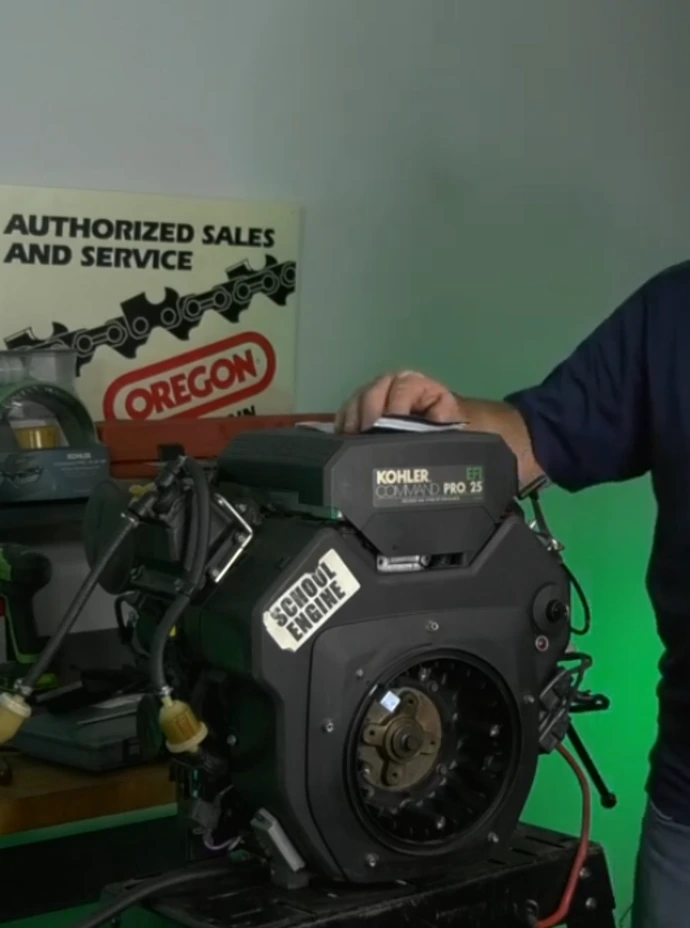
How to Check a Flywheel
Video Summary Transcript
The video explains the importance of ignition timing and how to properly inspect a flywheel key for shearing:
Ignition Timing Basics: Correct timing requires the spark plug to fire at the exact moment the piston approaches Top Dead Center (TDC) on the compression stroke [00:13].
Flywheel Components: Engines typically use a magnet on the flywheel and ignition coils (or a speed sensor for EFI engines) to determine when to fire [00:23].
Causes of Sheared Keys: Keys can shear if fasteners aren't torqued properly, if the engine hydraulically locks due to fuel, or if a lawnmower blade hits a solid object like a stump [01:16].
Inspection Myths: Simply looking down the keyway after removing the fastener is often insufficient [02:19]. Small nicks or shifts in the key can significantly advance or retard the timing [03:31].
The Proper Test: For "Half Moon" (Woodruff) keys, the only way to truly verify if it is sheared is to remove the flywheel using a puller, take the key out, and place it on a flat surface to see if it rocks or "teeters" [02:59].
Timing Alignment: While some engines allow you to check alignment by comparing the crankshaft keyway to the flywheel keyway at TDC, the physical removal and inspection of the key is the most reliable method [05:03].