
Pular para o conteúdo
Medart Engine University
  • Início
  • Education
    • Cursos
    • Education Sign-up Form
  • Community
    • Tech Hub
    • Technician Forum
    • Blog
    • Events
  • Technical Services
    • Technician Help Portal
    • Tecumseh/LCT Warranty Form
    • SBD/ MTD Warranty Authorization Request
  • Entre em contato
  • ​ 0
  • +1 800-888-7181
  • English (US) Português (BR) Español (América Latina)
  • Entrar
  • Entre em contato
Medart Engine University
  • ​ 0
    • Início
    • Education
      • Cursos
      • Education Sign-up Form
    • Community
      • Tech Hub
      • Technician Forum
      • Blog
      • Events
    • Technical Services
      • Technician Help Portal
      • Tecumseh/LCT Warranty Form
      • SBD/ MTD Warranty Authorization Request
    • Entre em contato
  • +1 800-888-7181
  • English (US) Português (BR) Español (América Latina)
  • Entrar
  • Entre em contato

Cursos

  • Training Category Group
    Mechanics drive line systems Small Engine Mechanics Electronics Welding Machining Design Repair Administration
  • Medart University
    Novice Mechanic Junior Mechanic Skilled Mechanic Advanced Mechanic Expert Mechanic ApprenticeMechanic Rehlko/Kohler EFI
  • Seu Nível
    Básico Intermediário Avançado
  • Ícone de certificação Certificações

Todos os cursos

Small Engine Repair Mastery Track

Small Engine Repair Mastery Track

 Medart Engine University is an internal training initiative developed by Medart Engine, a wholesale distributor serving the outdoor power equipment industry. It’s not a traditional university, but rather a structured educational platform designed to empower dealers, technicians, and industry professionals with hands-on knowledge and technical expertise.

 The curriculum focuses on real-world troubleshooting and product mastery—covering topics like EFI systems, hydrostatic transmissions, and lithium-ion technology. It blends legacy wisdom with modern innovation, often repurposing scrap parts for training and emphasizing sustainability through programs like Salvage the Future.

What sets Medart University apart is its gamified learning approach: tiered modules, certification quizzes, and community-building elements that make education engaging and rewarding. It’s a cornerstone of Medart’s mission to help dealers become more productive, profitable, and connected.


Small Engine Mechanics Mechanics Electronics Repair
13 passos
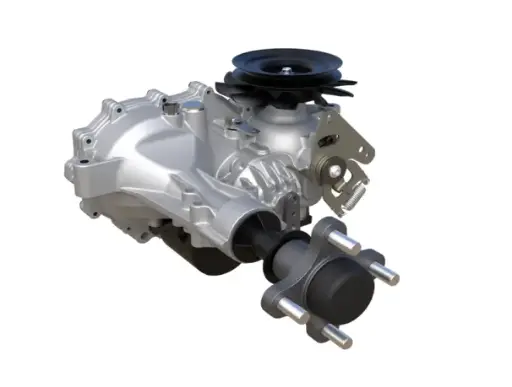
MEU Hydro-Gear 3100 Series Teardown & Inspection Review

MEU Hydro-Gear 3100 Series Teardown & Inspection Review


Gain a foundational knowledge of the Hydro-Gear 3100 Integrated Hydrostatic Transaxle. 

This module covers the basic internal workings, including the hydraulic pump and motor system, the function of the swashplate, and how power is delivered to the wheels. Ideal for understanding the core principles of hydrostatic operation.

6 passos
MTD/SBD P90 Gasoline Motor Disassembly Tutorial

MTD/SBD P90 Gasoline Motor Disassembly Tutorial

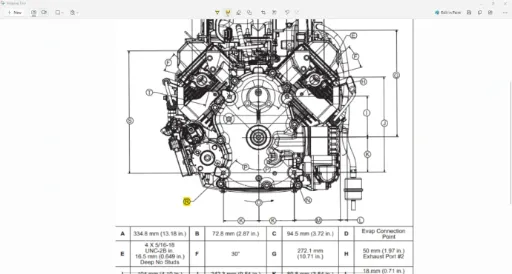
This course walks though the teardown of the P90 series vertical shaft engines with Intelli Power features.
10 passos
MEU EFI Master Class 101

MEU EFI Master Class 101

8 passos
Tuff-Torq 101

Tuff-Torq 101

This is an overview of Tuff-Torq repair procedures and operational principles.
drive line systems
17 passos
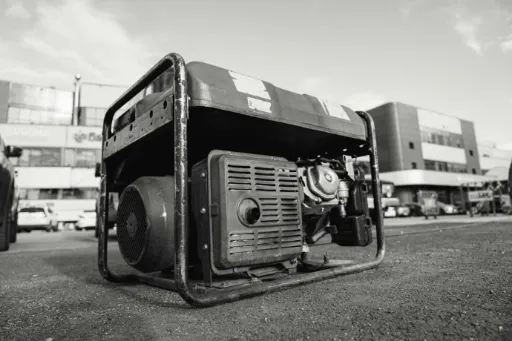
Mobile Generator Quiz

Mobile Generator Quiz

1 passos
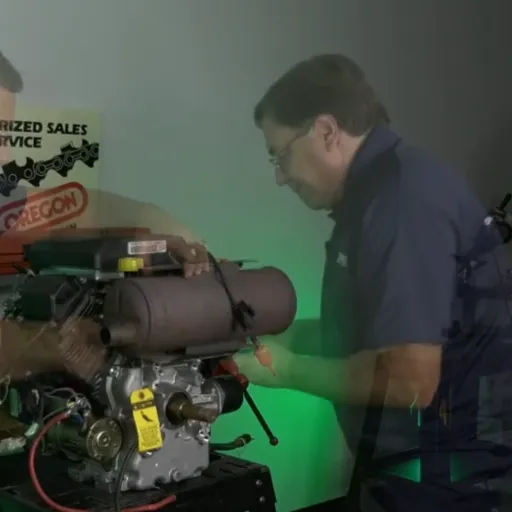
Rehlko/ Kohler Muffler Installation

Rehlko/ Kohler Muffler Installation

Video Transcript

  • [00:00] Intro: Mounting a muffler on a horizontal shaft Kohler twin-cylinder engine.

  • [00:06] Importance of the support bracket sequence to avoid premature failure.

  • [00:30] Demonstration of starting the bolts for the support bracket, keeping them loose to allow movement.

  • [01:04] Common mistake: Tightening the bracket first, which pulls down on the muffler and causes flange breakage.

  • [01:27] The trick: Use a boxed-in wrench to tighten the bracket after the muffler is in place.

  • [01:48] Mounting the muffler to the engine.

  • [01:55] Step 1: Fully tighten the four nuts holding the muffler to the engine first.

  • [02:26] Step 2: Place the bracket and start the two bottom bolts finger-tight.

  • [02:44] Step 3: Use a 10mm wrench to snug up the bracket bolts against the engine block.

  • [03:02] Crucial step: Never tighten one bolt fully at once; draw everything up evenly to avoid putting pressure on the muffler.

  • [03:34] Summary: Plate up loosely, mount muffler, snug bracket to block, then finish with lower mounting bolts.

Quiz

10 easy questions and get your XP


20 advanced questions expand your knowledge in the Accessory Catalog Quiz.
4 passos
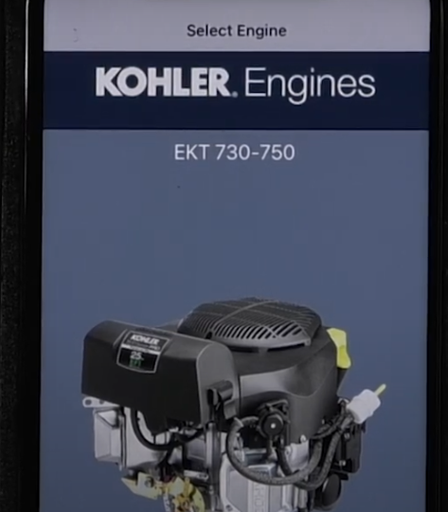
How to Check Trouble Codes - Kohler EFI

How to Check Trouble Codes - Kohler EFI

1 passos
Basic Engine Electrical Systems 101

Basic Engine Electrical Systems 101

Introduction to Electrical Theory

  • Fundamental Principles 00:52 Opens in a new window : The video begins by explaining the basic nature of electricity as the flow of electrons through a conductor.

  • Voltage, Amperage, and Resistance 01:25 Opens in a new window : It defines these three key terms using a water-flow analogy: voltage is pressure, amperage is the amount of flow, and resistance is the restriction to that flow.

  • Ohm's Law 02:45 Opens in a new window : The mathematical relationship between these three properties is introduced, explaining how technicians use it to troubleshoot circuits.

Engine Components and Systems

  • The Battery 04:15 Opens in a new window : This section covers the chemical process of storing electrical energy and the importance of proper maintenance to prevent corrosion and ensure strong starts.

  • The Ignition System 07:30 Opens in a new window : Detailed explanations are provided for both magneto and battery-powered ignition systems, describing how they generate the high-voltage spark necessary for combustion.

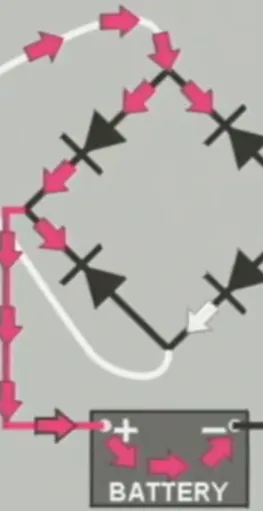
  • Charging Systems 15:20 Opens in a new window : The video explores how alternators and rectifiers work together to recharge the battery and power the engine's electrical accessories while it's running.

Testing and Maintenance

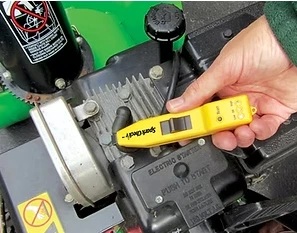
  • Using a Multimeter 22:10 Opens in a new window : A guide on how to use a multimeter to measure voltage drops and test for continuity within various engine circuits.

  • Common Electrical Failures 28:45 Opens in a new window : Identification of typical problems such as blown fuses, failed solenoids, and grounded wires that prevent engines from starting or running correctly.
1 passos
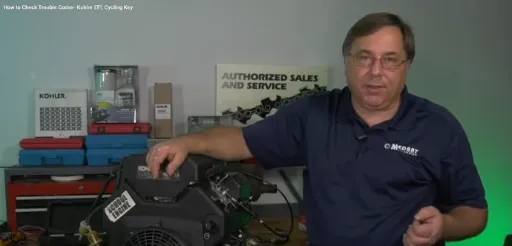
How to Check Trouble Codes- Kohler EFI, Cycling Key
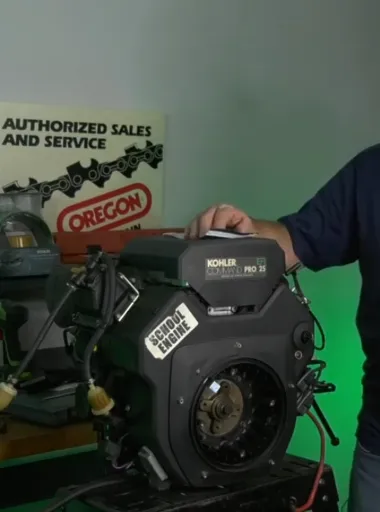
How to Check Trouble Codes- Kohler EFI, Cycling Key

This video, "How to Check Trouble Codes- Kohler EFI, Cycling Key," explains how to retrieve diagnostic trouble codes (DTCs) from a Kohler EFI engine without a scan tool by using the "key cycling" method.
Rehlko/Kohler EFI
1 passos
How to Check a Flywheel

How to Check a Flywheel

Video Summary Transcript

The video explains the importance of ignition timing and how to properly inspect a flywheel key for shearing:

  • Ignition Timing Basics: Correct timing requires the spark plug to fire at the exact moment the piston approaches Top Dead Center (TDC) on the compression stroke [00:13].

  • Flywheel Components: Engines typically use a magnet on the flywheel and ignition coils (or a speed sensor for EFI engines) to determine when to fire [00:23].

  • Causes of Sheared Keys: Keys can shear if fasteners aren't torqued properly, if the engine hydraulically locks due to fuel, or if a lawnmower blade hits a solid object like a stump [01:16].

  • Inspection Myths: Simply looking down the keyway after removing the fastener is often insufficient [02:19]. Small nicks or shifts in the key can significantly advance or retard the timing [03:31].

  • The Proper Test: For "Half Moon" (Woodruff) keys, the only way to truly verify if it is sheared is to remove the flywheel using a puller, take the key out, and place it on a flat surface to see if it rocks or "teeters" [02:59].

  • Timing Alignment: While some engines allow you to check alignment by comparing the crankshaft keyway to the flywheel keyway at TDC, the physical removal and inspection of the key is the most reliable method [05:03].
1 passos
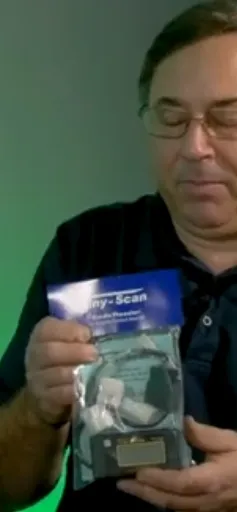
Tiny Scan

Tiny Scan

Here is the summary transcript for the video "Tiny Scan" regarding the TS-140 diagnostic code reader.

Video Summary Transcript

  • Introduction to Tiny Scan: The Tiny Scan (Part Number TS-140) is a specialized device used for reading and clearing engine trouble codes. It is designed to provide an automotive-style code reading experience for small engines, especially where manufacturers do not provide onboard indicator lights.

  • Manufacturer Compatibility: Right out of the package, the tool is compatible with MTD products using Delphi ECUs. It also includes specific adapters to plug into Briggs & Stratton and Kohler engines.

  • Connecting the Tool: To use the device, simply attach the correct adapter, locate the diagnostic port on the engine, and plug in the Tiny Scan tool.

  • Reading Codes: Once connected, turn the ignition key to the "on" position. The screen will display "DC" followed by a number (e.g., DC 0 means zero diagnostic codes).

  • Identifying Specific Faults: If codes are present (e.g., DC 2), you press the select button in the top left corner to cycle through the specific numerical trouble codes (such as 0332 or 0352).

  • Clearing Codes: After the mechanical repair is completed, the tool provides an option to "Clear Codes." You must push and hold the button to confirm. The device then re-reads the system to ensure the code count has returned to zero.

  • Limitations vs. Benefits: The presenter emphasizes that this is a code reader only; it does not provide live data displays or real-time readouts. However, it is preferred over "blink codes" because it eliminates the risk of miscounting flashes and human error.

1 passos
  • 1
  • 2

Overview

Filters

Clear Filters


Copyright © Medart Engine University 2026
English (US) | Português (BR) | Español (América Latina)
Distribuído por Odoo - Crie um site grátis