Ir al contenido
Medart Engine University
  • Inicio
  • Education
    • Cursos
    • Education Sign-up Form
  • Community
    • Tech Hub
    • Technician Forum
    • Blog
    • Events
  • Technical Services
    • Technician Help Portal
    • Tecumseh/LCT Warranty Form
    • SBD/ MTD Warranty Authorization Request
  • Contáctanos
  • ​ 0
  • +1 800-888-7181
  • English (US) Português (BR) Español (América Latina)
  • inicie sesión
  • Contáctanos
Medart Engine University
  • ​ 0
    • Inicio
    • Education
      • Cursos
      • Education Sign-up Form
    • Community
      • Tech Hub
      • Technician Forum
      • Blog
      • Events
    • Technical Services
      • Technician Help Portal
      • Tecumseh/LCT Warranty Form
      • SBD/ MTD Warranty Authorization Request
    • Contáctanos
  • +1 800-888-7181
  • English (US) Português (BR) Español (América Latina)
  • inicie sesión
  • Contáctanos
  1. Cursos
  2. Small Engine Repair Mastery Track
  3. Basics of Engine Operation
Navegación
Inicio └Small Engine Repair Mastery Track └Basics of Engine Operation

Small Engine Repair Mastery Track

0 %

Completado

Contenido del curso
  • Introduction to Small Engines
    • Basics of Engine Operation 10 xp
      • Prueba
    • Basic Types of Small Engines
      • Unirse a este curso para acceder a recursos
  • Safety Practices
    • Personal protective equipment
    • Safe handling of tools and materials
  • Basic Tools and Equipment
    • Introduction to hand tools
    • Basic measurement tools
  • Engine Parts Identification
    • Recognizing engine components
    • Understanding part functions
  • Basic Maintenance
    • Oil changes
    • Air filter replacement
  • Simple Troubleshooting
    • Diagnosing common issues
    • Basic repair techniques
  • Practical Workshop
    • Hands-on practice with basic tasks

Basics of Engine Operation

10 XP
Anterior Siguiente
Pantalla completa Compartir
Novice Mechanic
  • Más información
  • Comentarios (0)

Understanding the Four Strokes of a 4-Stroke Small Engine

The small engine is a marvel of engineering that powers a wide range of machinery, from lawnmowers to motorcycles. At the heart of many of these engines is the 4-stroke cycle, a process that efficiently converts fuel into motion. Understanding the four strokes of a 4-stroke engine is essential for anyone interested in mechanics or engine maintenance. This article delves into each stroke, explaining its role and significance in the engine's operation.

1. Intake Stroke

The cycle begins with the intake stroke. During this phase, the intake valve opens, and the piston moves downward in the cylinder. This movement creates a vacuum that draws a mixture of air and fuel into the combustion chamber. The precise mixture of air and fuel is crucial for the engine's efficiency and performance. By the end of the intake stroke, the cylinder is filled with this combustible mixture, ready for the next phase.

2. Compression Stroke

Following the intake stroke is the compression stroke. Here, the intake valve closes, and the piston moves back up the cylinder. This upward motion compresses the air-fuel mixture, significantly increasing its pressure and temperature. Compression is vital because it prepares the mixture for ignition, ensuring that it combusts efficiently. The better the compression, the more power the engine can produce from the same amount of fuel.

3. Power Stroke

The power stroke is where the magic happens. At the top of the compression stroke, the spark plug ignites the compressed air-fuel mixture. This ignition causes a rapid expansion of gases, forcing the piston back down the cylinder with considerable force. This downward movement is the engine's power stroke, where the energy from the fuel is converted into mechanical work. This stroke drives the crankshaft, which in turn powers whatever machinery the engine is attached to.

4. Exhaust Stroke

The final phase of the cycle is the exhaust stroke. After the power stroke, the piston moves back up the cylinder again. This time, the exhaust valve opens, allowing the spent gases from the combustion process to be expelled from the cylinder. Clearing these gases is essential to make room for a fresh air-fuel mixture, allowing the cycle to begin anew. Efficient exhaust is crucial for maintaining engine performance and preventing back pressure that can hinder engine operation.

Conclusion

The four strokes of a 4-stroke engine—intake, compression, power, and exhaust—work in harmony to convert fuel into motion. Each stroke plays a critical role in the engine's operation, contributing to its efficiency, power, and reliability. Understanding these strokes not only helps in appreciating the engineering behind small engines but also aids in diagnosing and maintaining engine performance. Whether you're a mechanic, a hobbyist, or simply curious, the 4-stroke cycle is a fundamental concept that underpins much of modern engine technology.
-------
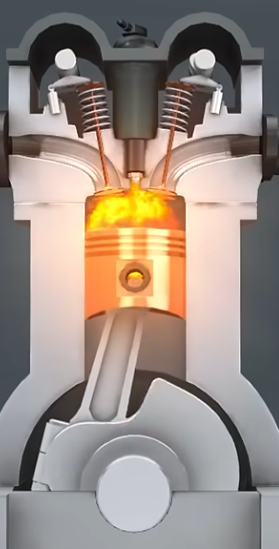
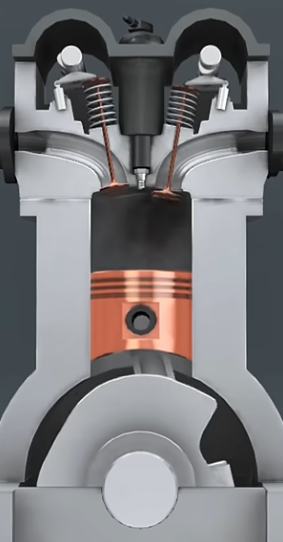
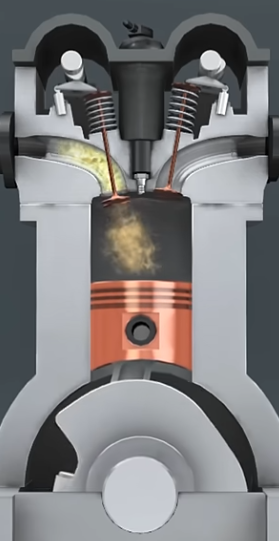
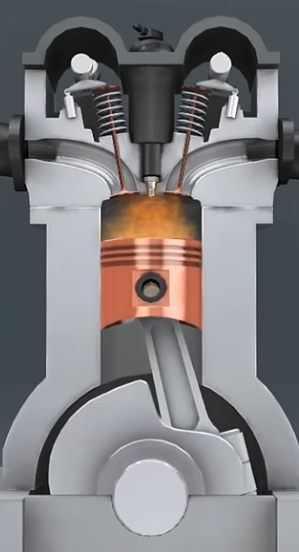
This is an animation of how a four stroke internal combustion engine works.

 The four strokes are as follows: 

1. Intake Stroke 
2. Compression Stroke 
3. Power Stroke 
4. Exhaust Stroke


1. Intake: The piston moves down, drawing a fuel-air mixture into the cylinder while the intake valve is open.
2. Compression: The piston moves up, compressing the fuel-air mixture while both intake and exhaust valves are closed.
3. Power: The compressed mixture is ignited, pushing the piston down and creating power. 
4. Exhaust: The piston moves up, expelling the burned gases from the cylinder through the exhaust port while the Exhaust valve is open. 
Calificación
0 0

No hay comentarios por ahora.

Unirse a este curso
para ser el primero en comentar.

1. What do the four stokes of the piston in a 4 stroke engine?
Intake, Power, Exhaust, Pressure Push, Pull, Ppen, Exhaust Ignition, Carburetion, Compression, Timing Intake, Compression, Power, Exhaust
2. The 4-stroke cycle is what?
how fuel is burned in an engine how many pulls it takes to start an engine old way of moving things with horses a process that efficiently converts fuel into motion.
3. What is the primary function of the intake stroke in a 4-stroke engine?
ignite the air-fuel mixture to expel exhaust gases from the cylinder to draw a mixture of fuel and air into the combustion chamber to compress the air fuel mixture
4. During which stroke is the air-fuel mixture compressed, increasing its pressure and temperature?
Intake Stroke Compression Stroke Power Stroke Exhaust Stroke
5. What occurs during the power stroke of a 4-stroke engine?
The piston moves up to expel exhaust gases The intake valve opens to draw in fuel The compressed air-fuel mixture is ignited, driving the piston down The piston compresses the air-fuel mixture
6. Which stroke is responsible for expelling spent gases from the cylinder?
Intake Stroke Compression Stroke Power Stroke Exhaust Stroke


Copyright © Medart Engine University 2026
English (US) | Português (BR) | Español (América Latina)
Con la tecnología de Odoo - Cree un sitio web gratuito