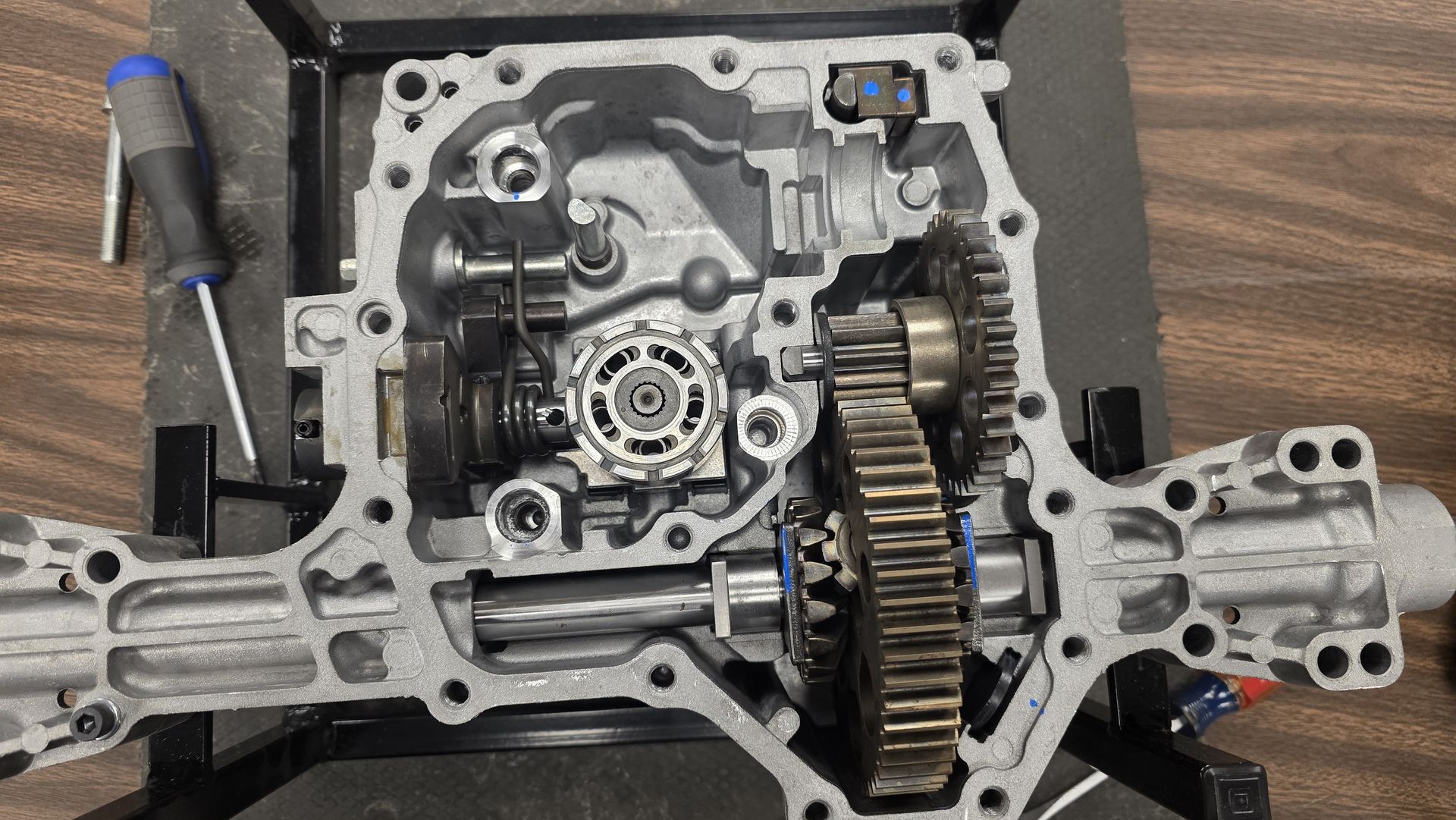
Technical Service Bulletin: Hydrostatic Transmission Diagnostics
Course: MEU-202 | Subject: Hydrostatic Drive Systems
1. Initial Visual Inspection & External Loads
Before diving into the internal hydraulics, you must assess the machine’s history by looking for signs of physical trauma. Hydrostatic systems—specifically the piston blocks and center sections—are sensitive to impact loads.
Impact Points: Inspect the mower deck and frame for dents or fresh scrapes. A sudden stop or collision can shock the drive system, causing the internal piston block to "hop" or scar the mating surface of the center section.
Debris & Environment: Check the wheel wells and chassis for heavy mud or wood. Excessive weight from mud or frequent "hard" changes in direction (shuttling between forward and reverse) significantly increases internal pressure and heat.
Tires: Uneven wear can indicate a transmission that has been dragging or over-compensating.
2. The "3 Bs" Assessment
The majority of drive issues are external. Always verify the 3 Bs before recommending a transmission replacement.
B - Belt (The Primary Drive)
A slipping belt is often mistaken for a failing pump.
The Resistance Test: Position the machine against a stationary wall or heavy object.
Procedure: Run the engine at 3/4 throttle. Slowly engage the drive controls. On smooth turf, the tires should "break free" and spin.
Diagnosis: If the tires do not spin and the engine doesn't bog down, the belt is likely slipping.
The Paint Marker Trick: If you suspect one side is weak, mark the drive belt with a white paint marker. Use a cell phone to record the pulley/belt while under load. If the mark stops moving while the engine is running, the belt or tensioner is the culprit.
B - Brake (The Resistance)
Ensure the parking brake linkage is fully disengaging.
Check for "chattering" sounds during operation, which often indicates the brake pads are partially dragging on the pucks.
Verify that the return-to-neutral mechanism is not being obstructed by the brake linkage.
B - Bypass (The Pressure Leak)
The bypass valve (towing valve) must be fully closed for the system to build pressure.
Physical Check: Ensure the bypass arm is moving through its full range of motion.
Contamination: Look for sticks, dried mud, or "customer ignorance" (the lever being left partially out).
Symptoms: Even a slightly open bypass valve will cause a massive loss of pressure, chattering, and sluggish performance.
3. Oil Evaluation
If the 3 Bs pass inspection, evaluate the fluid:
Oil Level: Check the expansion tank or purge port.
Oil Quality: Look for "milky" oil (water contamination) or a burnt smell (overheating). Dark, metallic-flecked oil indicates internal component wear.
4. Warranty vs. Rebuild Strategies
Once you have confirmed an internal failure, determine the most cost-effective path for the customer.
Under Warranty: If the unit is within the manufacturer's window, diagnostics typically end here. Gather your findings and contact the OEM for a replacement authorization.
NOTE: Burned oil and slipping transmissions from towing or abusing the machine are not covered under warranty.
Check the bagger hitch hole for wear and or elongation.
Out of Warranty: Compare the cost of a new assembly versus a bench rebuild.
The "Double Rebuild" Recommendation: If one transmission has failed due to hours or heat, the other side is usually not far behind. We recommend quoting a rebuild for both transmissions simultaneously, including:
New Piston Blocks
Center Sections
Fresh Seals & Filter
Parts Sourcing: If you do not have direct logins for Hydro-Gear or Tuff Torq, call the MEU Education Team with your model and serial number for a parts quote.
Knowledge Check
Which of the "3 Bs" would you check if the machine chatters while moving?
What engine speed is recommended when performing a wall-resistance test?
Why do we look for mud in the wheel wells during a transmission diagnosis?
True or False: A white paint marker can be used to diagnose a slipping belt.
Resources: